Firewise landscaping in Flagstaff is one of those topics that sounds like it’s going to mean sacrificing your yard for a gravel wasteland. It doesn’t. Done right, a Firewise landscape in Flagstaff can look better than what most properties have now — and it will actually be lower maintenance, not higher. Here’s how to think about it, and what to do first.
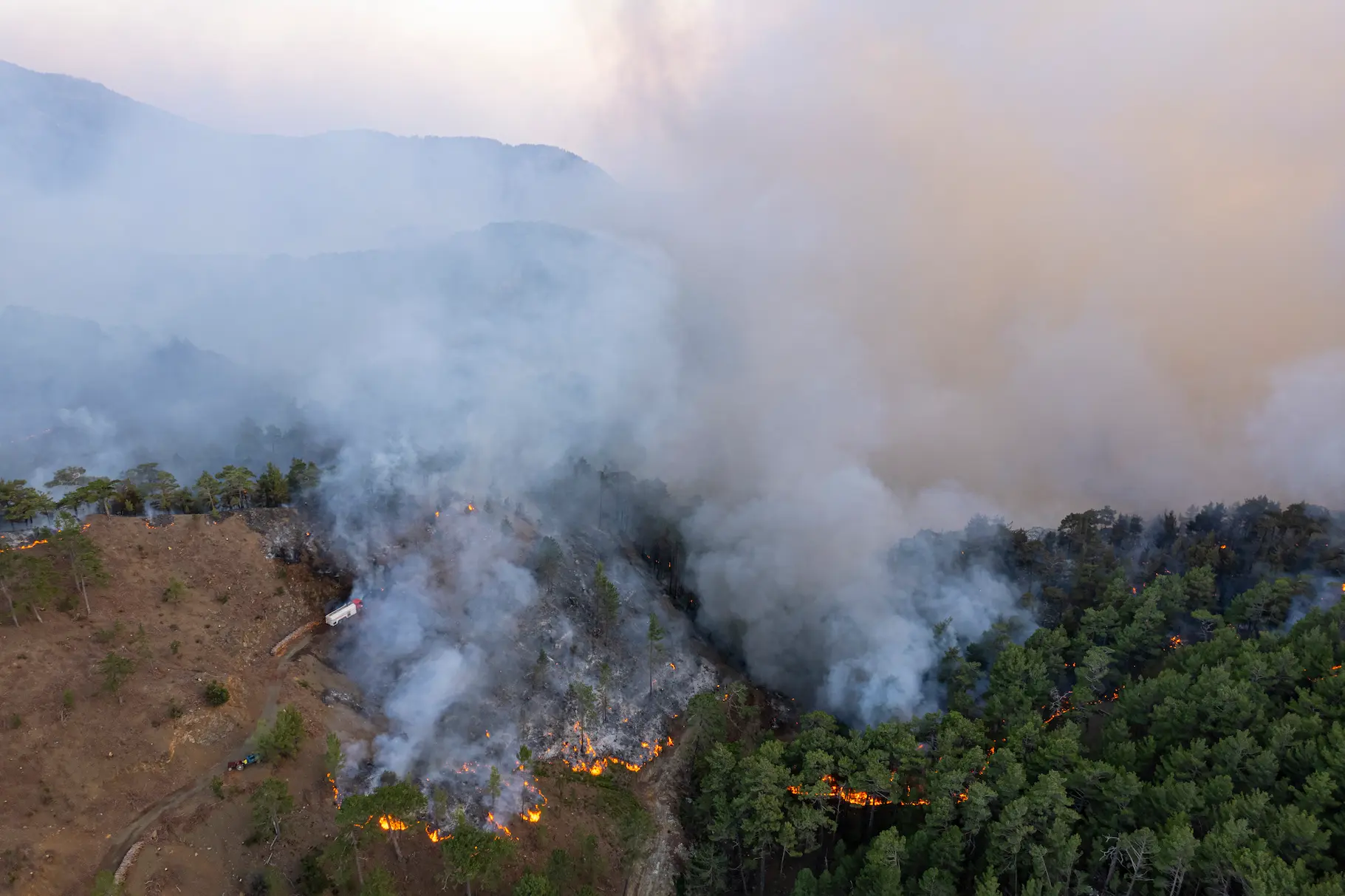
Wildfires are a real and recurring threat in Coconino County. The 2022 Tunnel Fire burned over 19,000 acres north of Flagstaff and destroyed more than 30 homes — a reminder that the risk isn’t abstract. Arizona’s Department of Forestry and Fire Management notes that the state has nearly 200 Firewise USA certified communities, and Flagstaff sits squarely in high-risk territory. The good news is that thoughtful landscaping is one of the most effective things a homeowner can do to protect their property.
Note: this post covers the landscaping side of fire preparation. For property inspections, fire-retardant treatment, and a formal protection plan, Advanced Fire Defense is a Flagstaff-based team staffed by current and retired firefighters who specialize in exactly that.
Start with the three defensible space zones
Firewise planning divides your property into three zones based on distance from the structure. Each zone has different rules for plant spacing, maintenance, and materials. Understanding the zones makes everything else easier.
Embers are the biggest threat. According to the Flagstaff Fire Department, ember exposure causes well over half of all structure losses during wildfires — not direct flame contact. Embers can travel miles before landing. That’s why what’s right next to your house matters most.
What to eliminate first
Before you plant anything new, focus on removal. These are the highest-risk items on most Flagstaff properties:
Ladder fuels
A ladder fuel is anything that helps fire climb from the ground into tree canopies. Pine needles catch, spread to a nearby shrub, which spreads to lower tree branches, which carries the fire into the crown. Removing lower tree branches (up to 6–10 feet from the ground), keeping shrubs pruned, and clearing pine needle buildup regularly all break that ladder.
Dense continuous plantings
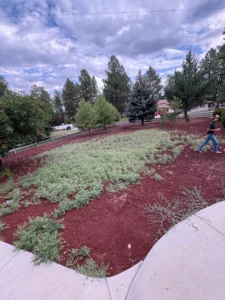
Large unbroken masses of vegetation — especially dry or resinous plants — give fire a highway right to your house. Break them up with gravel paths, rock features, or pavers. Small clusters of plants separated by non-flammable materials are the goal.
Dead material everywhere
Dead branches, dried grasses, accumulated pine needles in gutters and against the house — all of it needs to go. Ponderosa pines drop about a third of their needles each fall; clearing them from roofs, gutters, and the zone immediately around your house is one of the highest-impact things you can do each season.
Spring cleanup and Firewise go hand in hand. A thorough spring cleanup — clearing pine needles, removing dead plant material, pruning lower branches — does double duty. It makes your property look great and meaningfully reduces your fire risk at the same time.
What to plant (and what to avoid)
There are no truly fireproof plants, but spacing, moisture content, and resin levels make a real difference. Here’s a practical breakdown for Flagstaff properties:
- Apache plume
- Penstemon (beardtongue)
- Blue grama grass
- Native sedums and succulents
- Aspen (deciduous, low resin)
- Bedding annuals and perennial flowers
- Well-irrigated ornamental grasses
- Juniper (highly flammable)
- Ornamental grasses left dry
- Dense evergreen shrubs near house
- Wood chip or bark mulch in Zone 1
- Any dead or drought-stressed plants
- Continuous ground cover plantings
Deciduous trees are generally safer near structures than conifers — they hold more moisture, produce less resin, and don’t accumulate dead needle buildup. Aspens in particular are a great Flagstaff choice. When spacing trees in Zone 2, aim for at least 10 feet between individual crowns for deciduous trees, and 30 feet between evergreen crowns. Keep tree limbs pruned so they don’t touch or overhang your roof, and remove any branches within 15 feet of a chimney. If you have pines close to the house, prune lower branches up to 6–10 feet off the ground to eliminate the ladder effect.
How gravel and hardscape help
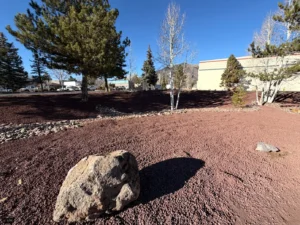
Rock, gravel, and pavers aren’t just a maintenance shortcut — they’re genuinely effective fire breaks. A gravel border around the house, decomposed granite in beds, or a paver patio close to the structure all create non-flammable barriers that slow or stop fire spread. They also happen to look clean, require almost no upkeep, and hold up well to Flagstaff’s winters.
From a design standpoint, mixing gravel beds, native plantings, and stone features creates a landscape that looks intentional and attractive — not stripped down. Some of the best-looking yards we work on in Flagstaff are also among the most Firewise.
Check if your neighborhood is a Firewise USA community. Many HOAs and neighborhoods in Flagstaff participate in the Firewise USA program, which means there may be community resources, inspections, or guidelines specific to your area. It’s worth knowing before you plan a major landscaping project.
Seasonal maintenance checklist
Even a perfectly designed Firewise landscape loses its protection if it isn’t maintained. Dead material accumulates, plants grow together, pine needles pile up. Here’s what to stay on top of each season in Coconino County:
- Clear pine needles from roof and gutters
- Rake Zone 1 and Zone 2 of all debris
- Prune lower tree branches (6–10 ft)
- Remove dead plants and dried grasses
- Check irrigation and turn on for season
- Inspect Zone 1 for any mulch or flammables
- Clear ponderosa needle drop from all zones
- Remove annuals that have gone to seed
- Thin any shrubs that have grown together
- Clear debris from under decks and porches
- Stack firewood away from the house (30+ ft)
- Winterize irrigation before first freeze
For most Flagstaff properties, a professional spring cleanup handles the bulk of this. For larger properties or those with significant tree coverage, a fall cleanup before needle drop season rounds it out. Ongoing landscape maintenance through the growing season keeps Zone 2 lean and green without you having to think about it.
Frequently asked questions
Not necessarily — and often less in the long run. Gravel, decomposed granite, and native plants are typically lower cost to install and maintain than turf or water-hungry non-natives. The upfront work is a one-time investment; the ongoing maintenance is lighter than a conventional landscape.
Generally positively, especially in Flagstaff’s market. As wildfire risk and insurance costs increase across Northern Arizona, buyers are paying attention to fire preparation. A well-maintained Firewise landscape can also help with insurability — some insurers in high-risk areas take defensible space into account.
Inspections typically assess your defensible space zones, ladder fuel presence, roof and gutter debris, plant spacing, and construction materials close to the structure. Advanced Fire Defense offers formal property inspections and protection plans for Flagstaff homeowners — their team includes current and retired firefighters.
Not automatically, but many HOAs in Flagstaff and Coconino County participate voluntarily in the Firewise USA program. If your HOA is a certified Firewise community, there may be specific requirements or resources available to residents. Check with your HOA board or contact the Arizona Department of Forestry and Fire Management.
Yes — we handle seasonal cleanups, gravel and rock installs, native planting, tree pruning, and full landscape design with fire safety in mind for homes and businesses across Flagstaff and Williams. We’re not fire inspectors, but we know how to build and maintain landscapes that meet Firewise principles.
Ponderosa Pathways handles Firewise-minded landscaping, seasonal cleanups, gravel and rock installs, and full landscape design for homes and businesses across Flagstaff and Williams. If you’re not sure where your property stands or what to prioritize first, we’re happy to walk through it with you.