Spring cleanup in Flagstaff looks different than it does in most of Arizona. At 7,000 feet, Flagstaff’s climate brings late freezes, heavy pine needle accumulation, freeze-thaw damage, and high-altitude soil that wakes up slowly — a real mix of tasks, some simple, some genuinely tricky to get right without local experience.
We’ve broken the most common spring cleanup Flagstaff homeowners face into two buckets: stuff you can handle confidently yourself, and stuff where DIY usually costs more than it saves.
The honest DIY list
These tasks don’t require specialized tools or local plant knowledge. If you have a weekend and a little energy, go for it.
- Raking pine needles from open areas
- Picking up wind-blown debris and small branches
- Pulling weeds before they go to seed
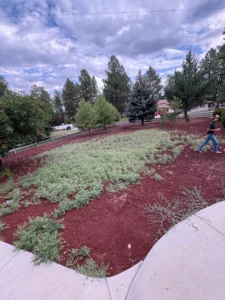
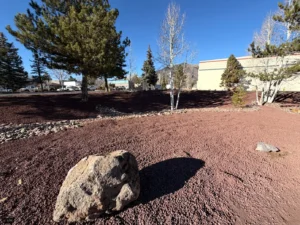
- Refreshing gravel or rock beds
- Basic edge cleanup along walkways
- Turning on drip irrigation and checking for obvious leaks
- Removing annuals that didn’t overwinter
- Pruning trees and large shrubs
- Irrigation system diagnostics and repair
- Grading or drainage correction
- Large debris or brush haul-away
- Pre-emergent weed treatment
- New planting and installation
- Anything involving power equipment near utilities
Where DIY goes wrong in Flagstaff
The most common spring cleanup mistake we see is pruning too early. It’s tempting — the days are warming up, you’re ready to get outside, and those dead-looking shrubs are eyesores. But Flagstaff regularly sees hard freezes into late April. If you cut back your Apache plume, rabbitbrush, or ornamental grasses too soon, you’re exposing fresh growth to frost damage that can set the plant back by a full season. Check the extended Flagstaff forecast before you start cutting.
Local rule of thumb: Wait until you see at least an inch of new growth before pruning most native shrubs in Flagstaff. For most plants, that means mid-to-late April at the earliest — sometimes early May in higher-elevation neighborhoods.
The second big DIY mistake is irrigation troubleshooting. Turning on your system and running each zone is totally manageable on your own. But when something isn’t right — a zone that won’t pressurize, a head that’s spraying sideways, an area that’s mysteriously soggy — guessing at the fix usually makes things worse. Flagstaff’s freeze-thaw cycles crack fittings in places that aren’t obvious, and misdiagnosed irrigation problems can go undetected until you’ve overwatered half a bed or lost a lawn section.
Skip the pre-emergent guesswork. Timing a pre-emergent weed application is more nuanced than the bag instructions suggest. Apply too early and it breaks down before weed seeds germinate. Too late and it’s useless. Soil temperature matters more than the calendar date — and at 7,000 feet, that varies more than you’d expect year to year.
What about pine needles?
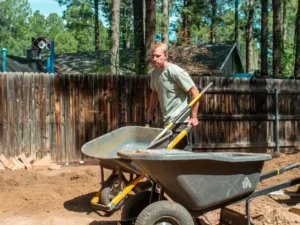
Pine needle cleanup is the great equalizer. Nearly every Flagstaff property deals with it, and it’s legitimately easy to DIY on smaller lots. Rake, bag, done. However, if you have a large lot, steep terrain, or significant accumulation against the house — a real fire risk in our Firewise community — the volume and hauling involved often makes hiring out the smarter call. Not because it’s technically difficult, but because it takes a full crew with the right equipment two hours versus a homeowner a full weekend.
For commercial properties, the math is different
If you manage a commercial property, the DIY calculation almost never adds up. Between labor time, equipment you don’t own, disposal logistics, and the reputational cost of a property that looks rough through April, a professional cleanup typically pays for itself. Your team’s time is better spent elsewhere, and the window to get properties looking good before peak spring foot traffic is narrow.
One thing that surprises people: many commercial property managers think a spring cleanup is a luxury. In reality, deferred cleanup — especially drainage blockages and winter debris buildup — creates liability exposure and often leads to more expensive repairs later in the season.
A simple way to decide
Ask yourself three questions before tackling any spring task yourself: Do I have the right tool? Do I know the right timing for this specific plant or product in Flagstaff’s climate? And if I get it wrong, what does the mistake cost? If the answer to any of those is uncertain, it’s probably worth a call.
We’re happy to talk through what your property actually needs this spring — no pressure, no upsell. If it’s something you can do yourself, we’ll tell you. If it makes sense for us to take it on, we’ll give you a straight quote.